
Operational Efficiency
Explores how objective OR data, surgical phase timing, and bottleneck detection drive measurable workflow improvements and power live operational visibility.
Get nSight’s curated white paper packet on OR efficiency, cost containment, safety, ROI, market positioning, and privacy-forward deployment.
We’ll send a customer-facing packet of materials that explains how nSight’s objective surgical record helps hospitals understand OR performance, identify improvement opportunities, and evaluate the platform across efficiency, cost, and safety.
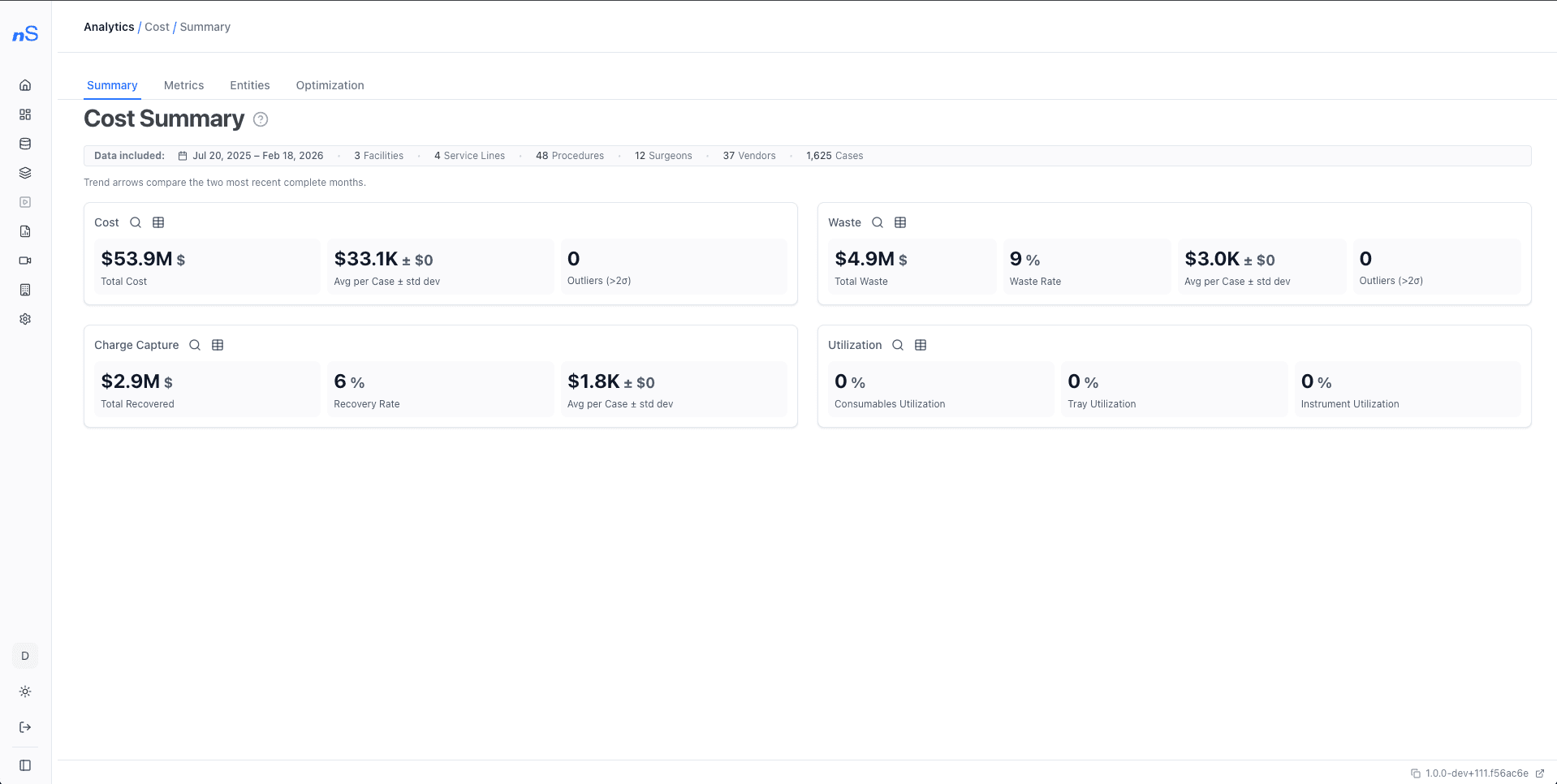
A curated set of white papers for hospital stakeholders evaluating nSight Surgical.
Explores how objective OR data, surgical phase timing, and bottleneck detection drive measurable workflow improvements and power live operational visibility.
Analyzes the impact of passive inventory detection on charge capture, supply waste reduction, tray rationalization, and preference-card optimization to plug OR margin leakage.
Examines the role of objective safety data in supporting surgical counts, safety checklists, sterile-field monitoring, and reducing the risk of retained foreign objects and surgical site infections.
Details the methodology for modeling the financial impact of surgical intelligence across OR efficiency gains, cost containment, and safety improvements.
Discusses nSight's privacy and legal defensibility stance including safeguards against data exposure as well as state and federal quality improvement pathways.
Outlines the role of ambient intelligence and objective OR data as the foundational reality layer for EMR analytics and capacity management in the modern smart hospital.
Evaluates surgical episode exposure under the CMS Transforming Episode Accountability Model (TEAM) and provides a risk-sizing framework for hospital leaders.
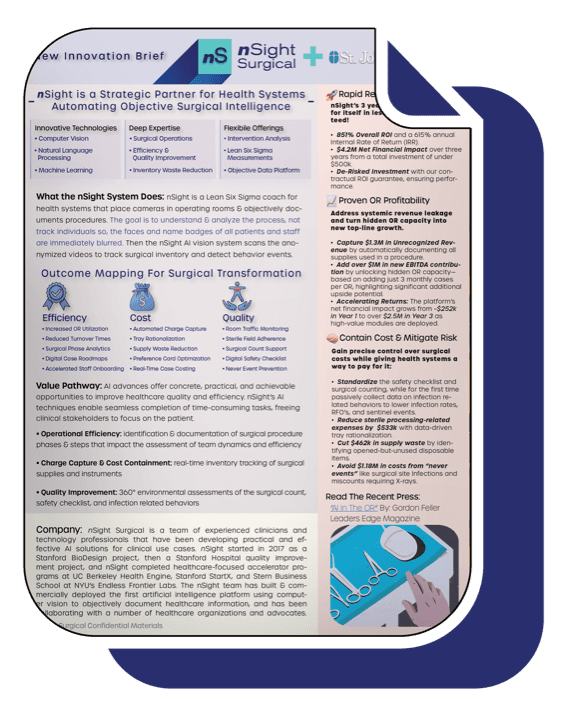
A one-page overview of nSight’s computer vision and AI platform, including how objective surgical intelligence supports efficiency, cost containment, and safety improvement.
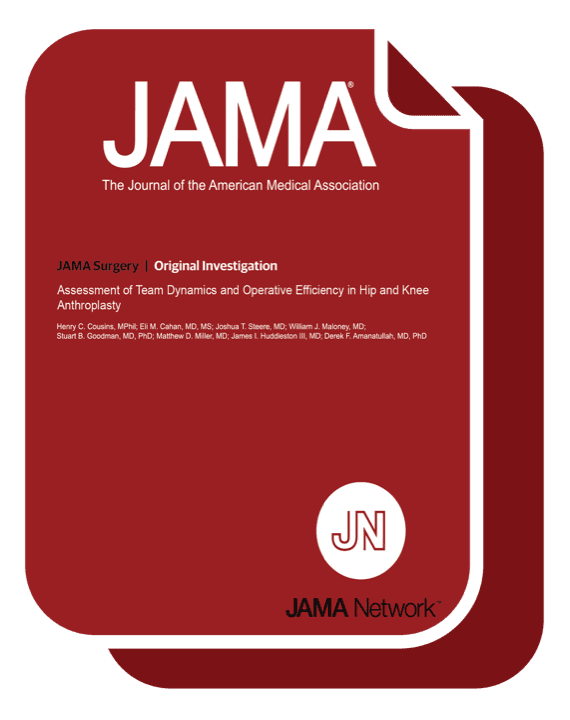
A peer-reviewed study showing how team dynamics, staff turnover, and surgeon-preferred staff can affect operative efficiency and perioperative communication.
Enter your email and we’ll send the complete white paper packet to your inbox.